Wavelet-Based Dispatch for Heterogeneous Generation Assets


Every energy site with multiple generation assets faces the same underlying question: which assets to run, when, and at what output. For small fleets, conventional optimization handles it. For larger ones, it quietly stops working — and most operators don't notice until they're already paying for it.
The standard engineering response to multi-asset coordination is to formulate it as a unit commitment problem and solve it with mixed-integer linear programming or dynamic programming. These methods are well understood and, under the right conditions, produce near-optimal results. The problem is scaling. Each additional dispatchable asset doubles the state space. At 72 assets, the number of possible on/off combinations per time interval reaches 4.7 × 10²¹ — a number that dwarfs the estimated grains of sand on Earth. Exact methods become computationally intractable. Commercial solvers require server infrastructure and annual license costs that most real-world deployments cannot justify.
The question we asked was straightforward: does the problem have to be solved this way?
The Signal Contains the Answer
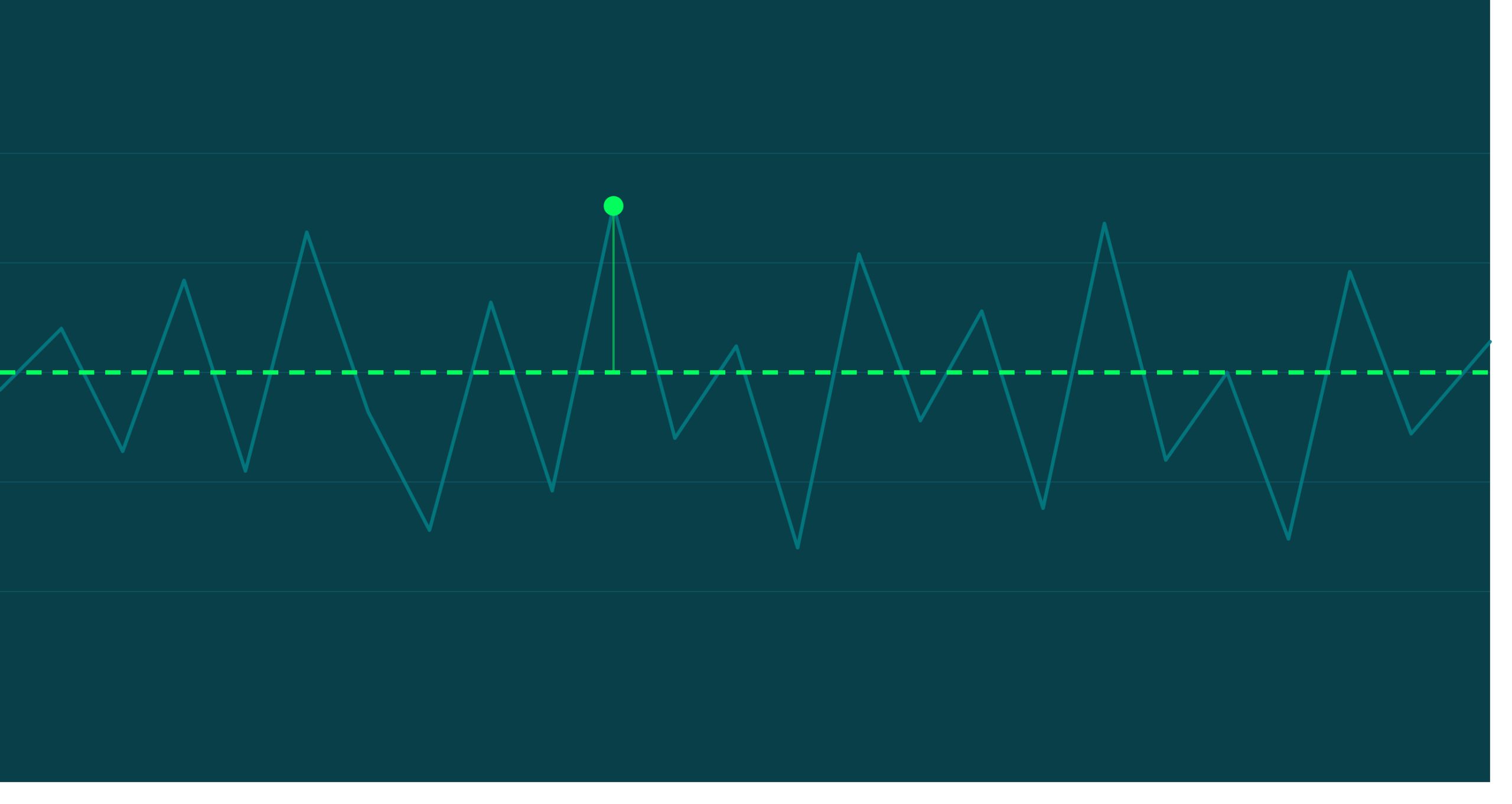
Electricity demand is not a flat target to be met — it is a time-varying signal with structure. A slow baseload that barely shifts from hour to hour. A daily rhythm of morning peaks and evening consumption. Fast transients that arrive and vanish in minutes. These layers operate at different speeds, and different types of generation asset are good at different speeds.
The Discrete Wavelet Transform separates those layers mathematically — in the same way an audio equaliser splits music into bass, mid-range, and treble. The approximation band captures slow baseload trends. Mid-scale detail bands capture diurnal variation. Fine-scale detail bands capture fast transients. Each band is then assigned to the asset class whose response characteristics match that timescale: baseload generation handles the slow band, flexible mid-merit plant handles the daily swing, batteries absorb the fast spikes.
Dispatch decisions emerge from the structure of the signal itself, rather than from iterating over every possible combination of generator states. There is no combinatorial explosion. Fleet size becomes irrelevant to computational cost.

Demand Behavior Decomposed Across Different Operating Timescales
What the Results Show
The method was validated across synthetic benchmarks, IEEE standard test systems, and real demand data from EirGrid in Ireland.
On a structured microgrid load profile, wavelet dispatch achieved within 2.3% of the mathematically optimal solution — a result that would require exhaustive dynamic programming to match — while outperforming conventional merit-order scheduling by 36–42% on total cost. On the IEEE RTS-GMLC benchmark of 72 generators, where dynamic programming requires 4.7 × 10²¹ state evaluations per interval, the entire fleet was dispatched in 0.2 milliseconds.
On real EirGrid data the picture was more nuanced and the paper is direct about it. After subtracting volatile wind generation, the residual load loses much of its multi-scale structure, and the wavelet advantage over simpler methods narrows. On gross demand profiles, which retain their diurnal shape, the method showed 18–20% above optimal — a useful heuristic margin. The method is most effective where the load signal genuinely has layered frequency structure: industrial microgrids, island systems, sites with mixed renewable and storage assets, and any deployment where demand, rather than residual wind, is the dominant signal.

Cost Comparison
Runs on a Raspberry Pi
The scalability and deployment arguments are where this prototype is hardest to argue against. The complete implementation is a 90 KB binary with no external dependencies. It executes in sub-millisecond time and runs on any low-cost embedded controller — a Raspberry Pi, an industrial IoT gateway, or equivalent ARM-class hardware. No commercial solver licence. No cloud connectivity. No server infrastructure.
For off-grid sites, remote installations, and deployments where internet connectivity cannot be guaranteed, this is not a marginal improvement over conventional energy management systems. It is a different category of tool entirely.
A Practical Companion: The Holiday Park
To test the method against a real-world scenario rather than benchmark data, we applied it to a 60-lodge Irish holiday park operating micro-hydro turbines, wind turbines, distributed rooftop solar across twenty lodges, a communal ground-mounted array, seven independently-owned batteries of varying sizes, a diesel backup generator, and a metered grid connection — nine dispatchable assets across multiple ownership structures, none of them coordinated.
The wavelet dispatch treated the entire fleet as a single system. It kept the diesel generator off throughout normal operation. It coordinated batteries owned by different parties using surplus solar from shared generation. And as a direct byproduct of the dispatch algorithm, it identified which asset class would reach capacity first as the park grows — translating signal analysis into capital planning guidance without any additional modelling.
The park manager does not need to understand wavelets. They need to know that the box in the office keeps the diesel quiet and tells them when to buy more solar panels.
Where This Belongs
The method is not a replacement for MILP solvers in environments where they are already deployed and justified. On large continental grids with existing optimisation infrastructure, a 20% cost gap is not acceptable.
But that is not the relevant comparison for most of the world's generation assets. The relevant comparison is between wavelet dispatch and a EUR 300 off-the-shelf microgrid controller running threshold logic — or between intelligent coordination and no coordination at all. On that comparison, a free, embeddable, licence-free heuristic that runs on commodity hardware and scales to any fleet size is not a compromise. It is the practical solution.
The approach scales to any fleet size without the exponential complexity of exact methods, making it suitable for large or heterogeneous asset portfolios where conventional optimisation becomes impractical. The implementation also requires no commercial software licences, no cloud connectivity, and runs on low-cost embedded hardware — making it deployable in locations where conventional energy management systems are neither practical nor affordable.
Read More
The full technical whitepaper and holiday park case study are available on the project page.
→ View the project
→ Download the technical whitepaper
→ Download the case study
If you’re running a multi-asset site and want to see how this performs on your own load profile, get in touch. We’re happy to run a quick evaluation and share the results.
Contact us.
Posts.
 07.23.26
Prove it before you buy it
 06.12.26
The Dam in Your Battery
 05.26.26
Webinar: Seeing the Whole Elephant
 05.20.26
15 GW of Solar Is Hiding on Britain’s Warehouse Rooftops
 05.01.26
Finding the Right Businesses for Solar
-
04.21.26
A Dam Builder’s Yardstick in the Lone Star State
 04.10.26
When the Fleet Gets Too Large to Optimize
- 04.02.26
24/7 Energy: Conceptually Clear, Operationally Hard