Every renewable project is built around a single number: the export limit its grid connection is consented to.
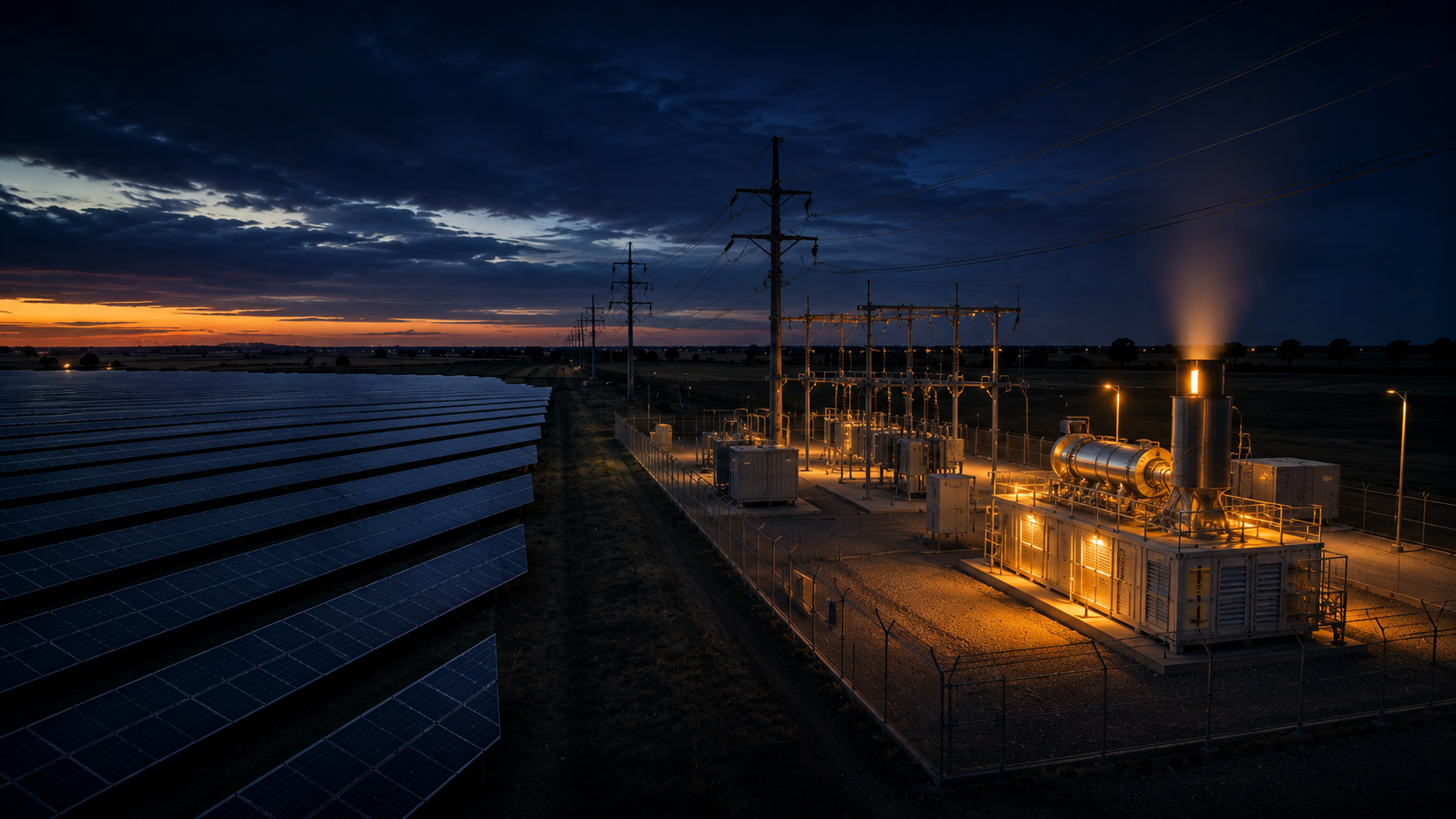

Every renewable project is built around a single number: the export limit its grid connection is consented to. Solar and wind reach that limit only for a few hours a year, so for much of the year a large share of hard won, fully paid for interconnection capacity sits idle. That idle capacity is stranded infrastructure, and United States interconnection reform, through FERC's Surplus Interconnection Service, now lets a complementary generator use it without joining the multi-year queue for a new connection.
The hard part is knowing where it is worth doing. This white paper sets out a deliberately simple way to measure the spare export capacity a site leaves on the table and to rank candidate sites by it, cheaply enough to sweep thousands of locations at once. It is transparent enough to explain to a chief financial officer and precise enough to defend to an engineer: no black-box optimiser, just the headroom, the fuel access, a feasibility gate, and a clean rule for sizing the unit that fills it.

It is also honest about what it is: a first pass screen, the entry point to a deeper programme of dispatch, price, and network modelling rather than a substitute for it. The paper carries a worked example, a validation against the exact dispatch optimum, and a frank account of where the method stops.
This screen deliberately stops at ranking sites. It leaves aside the harder question of when that headroom is worth dispatching against volatile prices. For that next rung, see Stuart Woolley's "A Dam Builder's Yardstick in the Lone Star State," which applies the Hurst exponent to ERCOT prices. And if you'd like to see where your own assets land: Full Stack Energy runs the screen and builds the deeper dispatch, price, and network analysis behind it get in touch and we'll take it from a shortlist to the full picture.
Contact us.
Posts.
 08.13.26
The Grid Access You’ve Already Paid For
 07.30.26
Built for the Tail, So You Don’t Have to Be
 07.23.26
Prove it before you buy it
- 06.12.26
The Dam in Your Battery
 05.26.26
Webinar: Seeing the Whole Elephant
 05.20.26
15 GW of Solar Is Hiding on Britain’s Warehouse Rooftops
 05.01.26
Finding the Right Businesses for Solar
-
04.21.26
A Dam Builder’s Yardstick in the Lone Star State